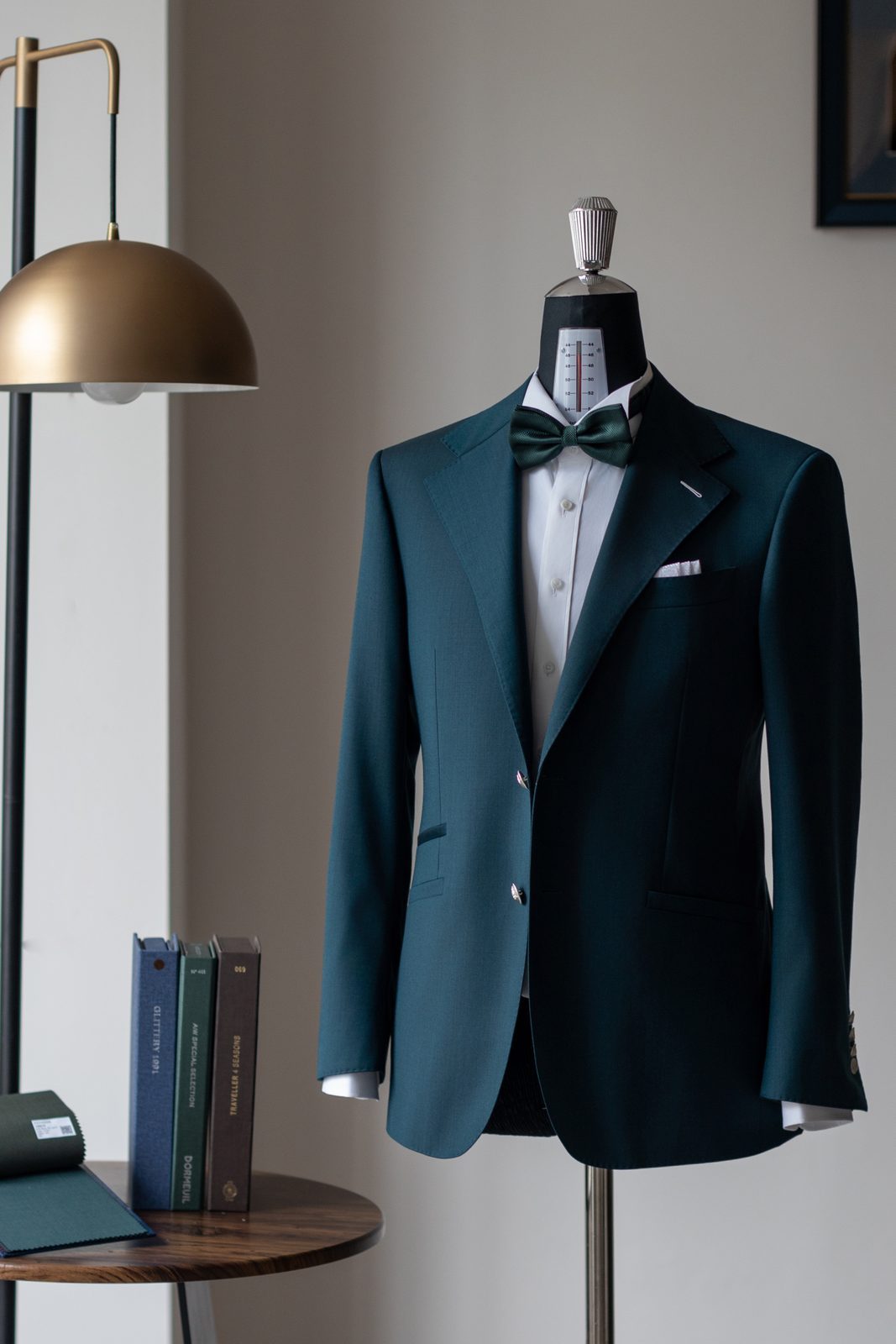
One rule organises the whole family: satin (or grosgrain) on the lapels and facings. That shine is the visual declaration that this is not daywear. Everything else is degrees of formality.
The family, most formal first
Evening dress, decoded
- Tailcoat: the summit. Cut away front and back, satin peak lapels, white bow tie and waistcoat — White Tie territory: state banquets, grand weddings, classical concerts.
- Tuxedo: the workhorse. Satin peak or shawl lapel, black bow tie — the standard answer to Black Tie: galas, awards, wedding banquets.
- Dinner jacket: a solo jacket over dark trousers, shawl collar, softer air — dinners and receptions with a relaxed register.
- Stroller: the daytime cousin — dark jacket, grey-striped trousers, for formal daytime events.
Lapels
The tuxedo comes with two classic lapels. Peak lapels are sharp and outward; shawl collars are rounded and reserved. Neither is superior — the tradition is British-peak, Italian-shawl — but the choice can flatter: broader shoulders and longer necks soften beautifully in a shawl; slender frames gain presence from a peak.
Cummerbund or waistcoat
The classic pairing is a cummerbund, pleats facing up. A low-cut waistcoat is the alternative route — cleaner and more vertical. Choose one; never both. Going without either has crept into fashion abroad, but on a printed Black Tie invitation, keep at least one.
The accessories line
A self-tied black silk bow tie — never a zip-on pretied. Studs or a covered placket, a white or tonal pocket square, and patent leather shoes. Traditionally, no wristwatch on Black Tie: formal dress does not tell the time.