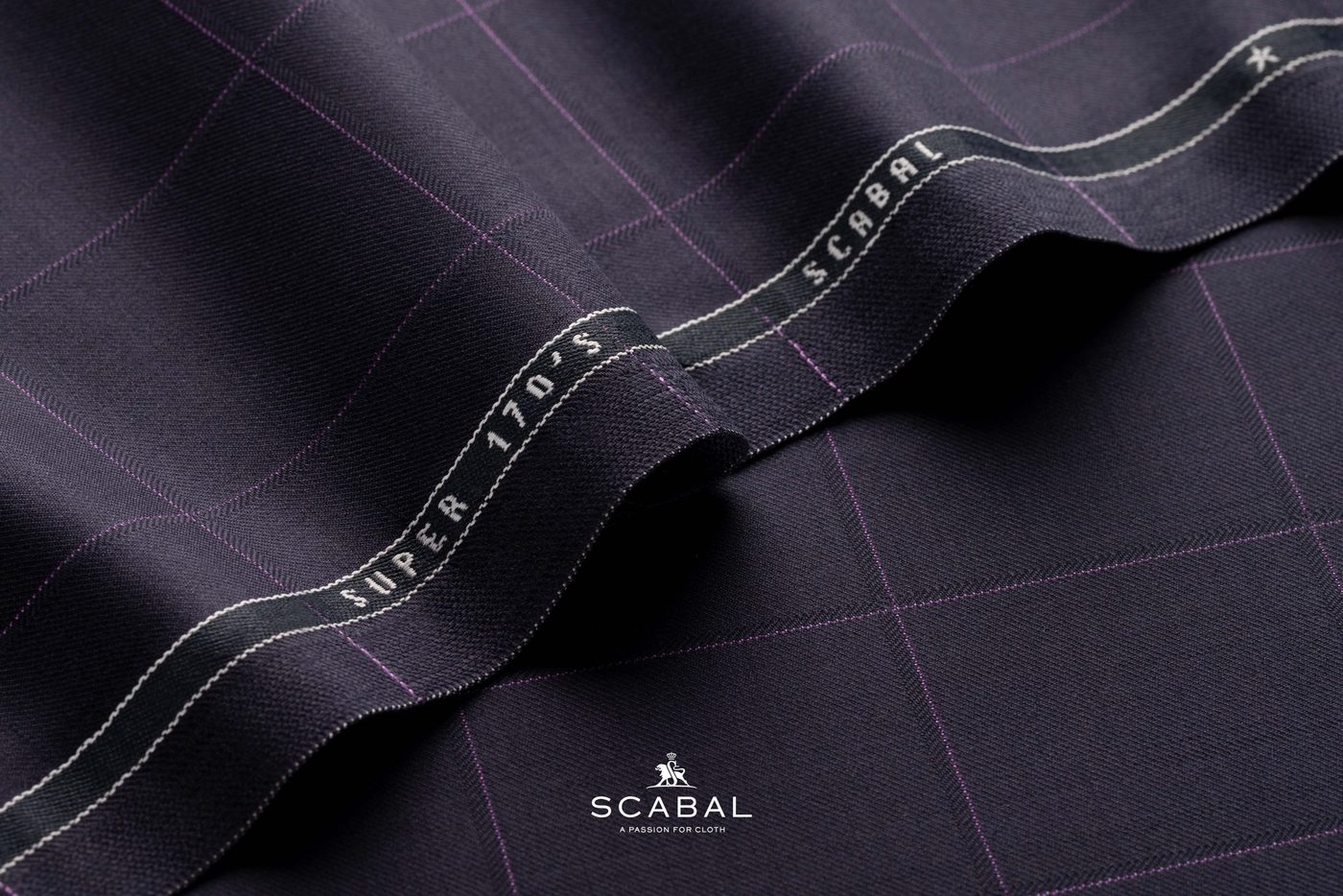
Cloth is the ingredient list of a suit. Same cutter, same handwork — different cloth, different personality. There is no single right answer, but there is a clear logic.
Origin sets the character
British cloth (Holland & Sherry, Scabal, Thomas Mason, Dormeuil) is close-woven, crisp and resilient — the choice for business tailoring and anything that must "stand". Italian cloth (Loro Piana, Zegna, VBC, REDA, DRAGO, Marzoni, Marzotto) is looser, softer and more lustrous — the choice for spring-summer and wedding wear.
Count is not a competition
The Super number measures fibre fineness. Higher means finer and more lustrous — and more delicate. For a first business suit, Super 110's–150's is the sensible zone; Super 170's and above are occasion cloths that ask to be pampered.
In one line each
- First business suit: Super 110's–130's, resilience first
- Wedding suit: Super 130's–150's, drape and lustre first
- Statement piece: Super 170's+, and accept the delicacy
Weight sets the season
Lighter weights breathe and drape — the answer to a Shenzhen summer. Mid-weights cover three seasons and are the house default. Heavy flannels and tweeds belong to northern winters or deliberate statements. In Shenzhen, two wardrobes — a mid-weight and a high-twist light — cover the year.
The Du cloth library
度·BESPOKE holds strategic partnerships with 13 British and Italian mills; the books are in store to be handled. The full directory lives on Craft & Fabrics, and every finished garment keeps its mill label inside.