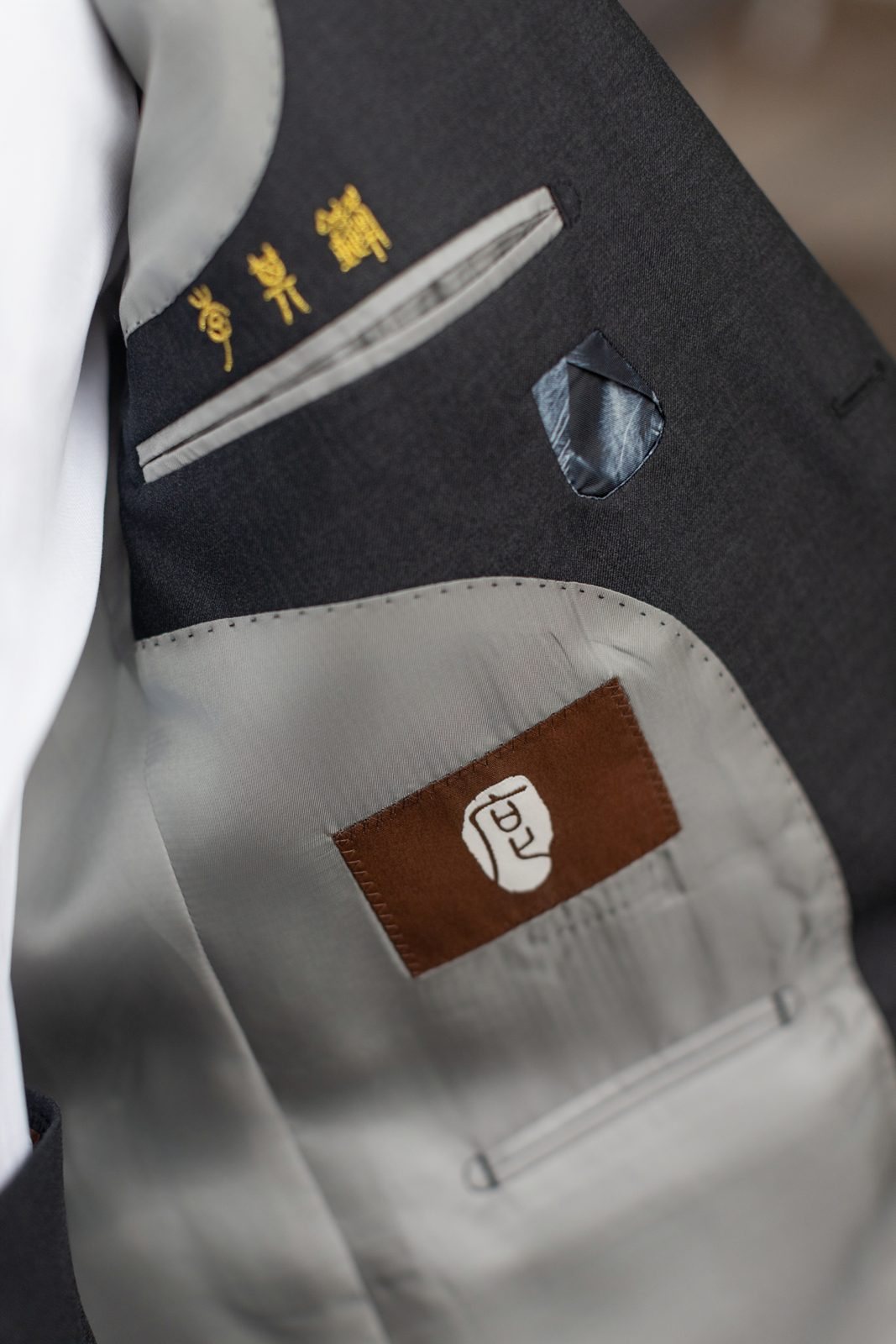
Labels list the fabric, never the canvas. Yet the canvas — the interlining floating between cloth and lining — decides whether a chest holds a sculpted line in year five or collapses into ripples.
The three structures
Quick identification
- Fused: interlining glued to the cloth under heat. The production standard — fast and cheap.
- Half canvas: a sewn chest canvas in the upper body only.
- Full canvas: a horsehair-wool canvas through the whole front, padded in by hand. The bespoke standard.
Why full canvas behaves better
A full canvas is sewn, not glued. Hand padding stitches fix cloth and canvas while leaving them a whisper of freedom, so the three layers — cloth, canvas, body — move together and the chest keeps a living, sculpted curve. Over the years the canvas moulds to the wearer's habits; the jacket becomes yours in a way glue never allows.
Why fused fronts bubble
Glue bonds cloth and interlining rigidly, but the two shrink at different rates through cleaning and humidity. When the glue gives way locally, the chest develops a regular ripple pattern that cannot be repaired — the fix approaches the cost of a new front.
How to tell them apart in thirty seconds
Pinch the front hem, separating cloth from lining: if the layers slide, the canvas is sewn; if they feel welded, it is fused. Then look at the lapel — a soft, curved break suggests sewn canvas; a hard, creased fold suggests glue.
At 度·BESPOKE
Every Du garment carries a full canvas, hand-padded point by point, corrected on the half-made fitting. See Craft & Fabrics for the full process — or visit the Shenzhen atelier and feel both structures side by side.